Institute for a Sustainable Earth

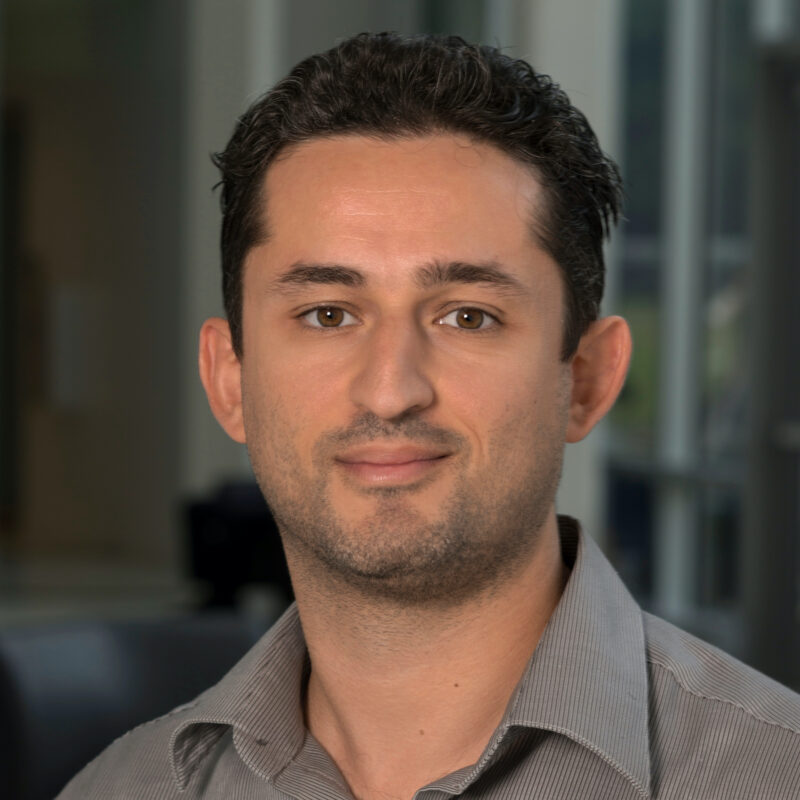
Edward Huang, PhD

Title: Associate Professor, Systems Engineering and Operations Research Department

Phone: 703-993-1672

Website: http://mason.gmu.edu/~chuang10/

Groups: Faculty

Research Focus

My research interests are in the area of model-based systems engineering, risk optimization and facility design. I received my Ph.D. in Industrial & Systems Engineering from Georgia Institute of Technology. Prior to joining George Mason, I worked as a senior system engineer at Optym.

Current Projects

■ Model-based Systems Engineering: System Modeling Language (SysML), Model Verification, Control Modeling, and Model Tranformation.

■ Risk Mitigation: Stochastic Programming, Risk Measurement, Risk Mitigation and Resilience- Driven System Design.

■ Facility Planning and Design: Strategic Supply Chain Network Design, Distribution Planning, and Manufacturing Systems Design.

Select Publications

■ Huang, E., et al. (2018). TRobust model for the assignment of outgoing flights on airport baggage unloading areas. Transportation Research Part E: Logistics and Transportation Review 115, 110-125.

■ Zhao, H., et al. (2018). Clinical trial supply chain design based on the Pareto-optimal trade- off between time and cost. IISE Transactions, 50(6), 512-524.

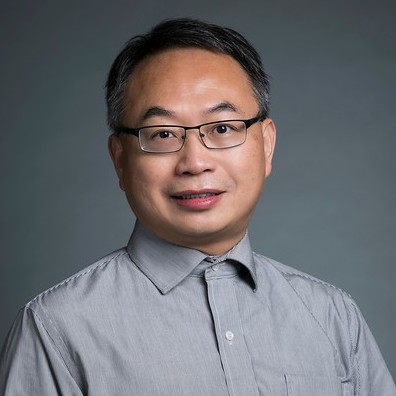
 

Amy C. Hutchison, PhD

Title: Associate Professor, School of Education

Phone: 703-993-2166

Groups: Faculty

Research Focus

My scholarship centers around three primary areas of inquiry: (1) Understanding how digital technology can be used equitably and to support diverse learners; (2) Understanding and supporting the development of STEM literacy among underrepresented students; and (3) Understanding how to support students with disabilities in learning computer science. Focused on these areas of interest, I conduct research across the PK-20 spectrum, across disciplines, in formal and informal learning environments, and with pre-service and practicing teachers using a variety of inquiry tools and methodologies. In my work, I have constructed and examined innovative instructional approaches and practices that are facilitated by the integration of digital technology, which most recently include the use virtual and augmented reality in classroom instruction.

Current Projects

■ Preparing K-5 teachers to integrate the computer science standards of learning in inclusive classrooms to support students with high incidence disabilities (www.inclusivecomputerscience.org).

■ The coding to learn project for enabling primary students to experience a new approach to English learning.

Select Publications

■ Hutchison, A. (2018). Using virtual reality to explore science and literacy concepts. The Reading Teacher, 72(3), 343-353.

■ Hutchison, A. (2016). Programming: What should be mandatory? Literacy Today, 33(4), 14-15.

■ Estapa, A., Hutchison, A., and Nadolny, L. (2017). Recommendations to support coding in the elementary classroom. Technology and Engineering Teacher, 77(4), 25-29.

■ Hutchison, A., Nadolny, L., and Estapa, A. (2017). Using coding apps to support literacy instruction and develop coding literacy. International Reading Association Cross Journal Virtual Issue on Literacy Across the Disciplines.


Jie Zhang, PhD

Title: Professor, Physics and Astronomy

Phone: 703-993-1998

Website: http://solar.gmu.edu/

Groups: Faculty

Research Focus

I work on solar physics, heliospheric physics, and space weather. I study the physical mechanism that generates solar storms, i.e., flares and coronal mass ejections (CMEs). I also study the magnetic evolution of solar active regions and how the evolution leads to energy buildup, instability, and eruption. My research addresses propagation and evolution of CMEs in the interplanetary space. I also put effort into transforming these research activities into tools for predicting solar flares and Earth-impact of CMEs. My work serves the practical purpose of making advanced space weather prediction that can mitigate adverse space weather effects on human space exploration, satellites, communication, and navigation. I have authored and co-authored more than 100 refereed journal articles and two edited books and generated more than 4000 citations. I am one of the co- founders of the space weather research and education program at GMU, which started in 2003. I am a recipient of National Science Foundation (NSF) Early CAREER award (2008) in the US and an elected Kavli Fellow (2011).


Barry A. Klinger, PhD

Title: Associate Professor, Department of Atmospheric, Oceanic, and Earth Sciences

Phone: 703-993-9227

Website: https://mason.gmu.edu/~bklinger

Groups: Faculty

Research Focus

I use computer models to better understand how the ocean transports heat within the Earth system. The ocean plays an important role in carrying heat from the equator, where there is an excess of sunshine, to higher latitudes, where the heat makes the climate warmer than it would otherwise be. The ocean also carries heat downward from the surface as the world continues to warm because of climate change. Some of the uncertainty in understanding the Earth’s response to rising greenhouse gases is caused by our lack of understanding of the ocean heat uptake. The ocean acts as a kind of flywheel that delays the Earth’s response to climate change, and by better understanding how this happens, we will improve our ability to understand how much climate change will continue even after we eliminate carbon dioxide emissions to the atmosphere.

Current Projects

■ I am currently working on a new book: How Bad? An Inquiry into Climate Change Consequences.

Select Publications

■ Klinger, B. A., and Haine, T. W. N. (2019). Ocean circulation in three dimensions, Cambridge University Press.

■ Garuba, O. A., and Klinger, B. A. (2018). The role of individual surface flux components in the passive and active ocean heat uptake. Journal of Climate, 31, 6157-6173.

■ Garuba, O. A., and Klinger, B. A. (2016). Ocean heat uptake and interbasin transport of passive and redistributive components of surface heating, Journal of Climate, 29, 7507-7527.

■ Klinger, B. A., and Cruz, C. (2009). Decadal response of global circulation to Southern ocean zonal wind stress perturbation, Journal of Physical Oceanography, 39, 1888-1904.


Amy E. Fowler, PhD

Title: Assistant Professor, Potomac Environmental Research and Education Center

Phone: 703-993-5956

Website: https://esp.gmu.edu/faculty-staff/faculty-bios/amy-fowler/

Groups: Faculty

Research Focus

My general research interests and experiences include global aquatic invertebrate species patterns, biodiversity, phenotypic plasticity, parasitology, and community and population level interactions of aquatic invertebrates, especially those concerning invasions. I have experience working in freshwater, estuarine, and marine systems both in the United States and globally. Currently, my laboratory at GMU has three main topics of study: host-parasite interactions, invasion dynamics and processes, and natural resource management of commercially and recreationally important aquatic invertebrate species.

Current Projects

■ Long-term assessment of invertebrate communities in the Potomac River: Indications of environmental change? Using a 40 year data set collected by PEREC, we are uncovering changes to the invertebrate community in the Potomac and linking changes to environmental drivers brought on by legislation (i.e., the Clean Water Act).

■ Comparatively parasitology of native and invasive freshwater snails in the Potomac. Invasive species can leave parasites behind in a novel location or become a novel vector for native parasites in a new location; some of these parasites are of concern for humans. Here, we investigate parasites living within native and invasive species of freshwater snails in the Potomac River.

■ Impacts of two functionally distinct invaders on facilitation and community succession. In 2018, a new invasive snail was found in Baltimore County, inhabiting streams already invaded by an invasive diatom known as rocksnot. Here, we are performing field manipulations to determine the interaction these two invaders have on the structuring of native invertebrate communities.

■ Co-PI of GMU OSCAR Undergraduate Summer Team Impact Grants (2017-2020).

Select Publications

■ Fowler AE., et al. (2020). Temporal shifts in a vector’s propagule supply characteristics and implications for invasion ecology. Marine Ecology Progress Series, 641: 13-24.

■ Fowler AE., et al. (2016). Opening Pandora’s bait box: a potent vector for biological invasions of live marine species. Diversity and Distributions, 22(1): 30-42.

■ Fowler AE., et al. (2016). Relationships between meteorological and water quality variables and fisheries- independent white shrimp (Litopenaeus setiferus) catch in the ACE Basin NERR, South Carolina. Estuaries and Coasts, 41(1): 79-88.


Helen B. Chin, PhD

Title: Assistant Professor, Department of Global and Community Health

Phone: 703-933-5388

Website: https://publichealth.gmu.edu/profiles/hchin4

Groups: Faculty

Research Focus
My research focus is centered around investigating factors that adversely affect the reproductive health of women and girls, as well as their offspring. Currently I am studying how endocrine disrupting exposures that occur naturally through diet or from use of consumer products affect ovarian development and function. I am interested in studying the association from the minipuberty of infancy to the menopausal transition. My past research has included examining factors associated with not receiving fertility counseling among recently diagnosed cancer patients and the association between phthalates (found in personal care products and food packaging) and length of gestation and early pregnancy events.

Current Projects
  • Assessing the association between soy formula feeding and male minipuberty
  • Characterizing the prevalence of hirsutism in young African-American women
  • Identifying patterns of reproductive hormone trajectories in infant girls

Christopher E. Clarke, PhD

Title: Associate Professor, Department of Communication

Phone: 703-993-8031

Website: https://communication.gmu.edu/people/cclark27

Groups: Faculty

Research Focus

My research on health and environmental risk communication focuses on two broad questions: First, what factors motivate people to care about health and environmental topics? Second, how can we craft effective messages that motivate people to care more?

Within both areas, I am especially interested in the role of social-psychological factors like political ideology, attention to news media discourse, social norms, scientific consensus, and psychological distance. Specific topics of interest/expertise include energy development (i.e., unconventional oil and natural gas development via hydraulic fracturing; vaccine safety; and climate change, among others. I have an inter-disciplinary background in communication, public health, and environmental policy, and I try to engage all of these fields in my scholarship.

Current Projects

■ Designing messages to build public support for federal climate change policy, specifically a carbon tax.

■ Understanding social-psychological factors that drive public support for federal climate change policy, specifically a carbon tax.

■ Understanding social-psychological factors that drive public support for coronavirus pandemic mitigation measures (including social distancing and vaccination).

Select Publications

■ Clarke, C. E., and Evensen, D. (2019). The politics of scientific consensus? political divergence and partisanship in unconventional energy development in the United States. Energy Research & Social Science, 51, 156–67.

■ Clarke, C. E., et al. (2019). Communicating about climate change, natural gas development, and “fracking”: U.S. and international perspectives. Oxford Research Encyclopedia of Climate Science, Oxford University Press.

■ Clarke, C. E., et al. (2016). How geographic distance and political ideology interact to influence public perception of unconventional oil/natural gas development. Energy Policy, 97, 301–309.

■ Clarke, C. E., et al. (2015). The influence of weight-of-evidence messages on (vaccine) attitudes: A sequential mediation model. Journal of Health Communication, 20(11), 1302–1309.


Paul Houser, PhD

Title: Professor, Department of Geography and Geoinformation Sciences

Phone: 301-613-3782

Website: https://science.gmu.edu/directory/paul-houser

Groups: Faculty

Research Focus

I am an expert in local to global land surface-atmospheric remote sensing, in-situ observation and numerical simulation, development and application of data assimilation methods, and global water and energy cycling.

Current Projects

■ HMA-LDAS: Hyper-resolution High Mountain Asia – Land Data Assimilation System.

■ Next-Generation Large-Scale Fractional Freeze/Thaw Analysis.

■ Advancing hydrologic modeling in High Mountain Asia by merging and downscaling satellite-based precipitation products.

■ Enabling Sustainability in High Mountain Asia: Mapping Permafrost Degradation using Satellite Data Assimilation.

Anne Lauer, MA, MS

Title: Instructor, Business Foundations

Phone: 703-993-1851

Website: https://www.linkedin.com/in/anne-lauer-7ab8b66/

Groups: Faculty

Research Focus

■ Critical thinking for strategic decision making.

■ Communications.

■ Service marketing.


Massimiliano Albanese, PhD

Title: Associate Professor, Information Sciences and Technology

Phone: 703-993-1629

Website: https://csis.gmu.edu/albanese/index.php

Groups: Faculty

Research Focus

As critical infrastructures, including the power grid, undergo modernization efforts and become “smarter” to meet resilience and sustainability objectives, both government and commercial organizations face increasingly sophisticated and potentially devastating threats from state actors, organized crime, and other malicious actors. A 2018 report of the White House’s Council of Economic Advisers estimates that malicious cyber activity cost the U.S. economy between $57 billion and $109 billion in 2016 alone, and indicates that cyberattacks against critical infrastructure could cause up to $1 trillion in damage. My research aims at mitigating such threats by tackling the problem on multiple fronts. First, my work on cyber situational awareness aims at improving the defender’s understanding of the cyber landscape in which organizations operate, including potential threats and attacker’s objectives. Second, my work on moving target defense and adaptive cyber defense aims at developing advanced techniques to continuously adapt to an evolving security landscape, create uncertainty for the attacker, and increase the cost for malicious actors to conduct attack campaigns.

Current Projects

■ Secure Configuration for the IoT Based on Optimization & Reasoning on Graphs. In collaboration with PARC, this project aims at developing a framework to automatically optimize the configuration of complex IoT systems, balancing security and functionality constraints.

■ Adversarial and Uncertain Reasoning for Adaptive Cyber Defense: Building the Scientific Foundation. This MURI project aims at defining the scientific foundation of Adaptive Cyber Defense, focusing on modeling the behavior of adversaries and reasoning in the presence of uncertainty.

■ Center for Cybersecurity Analytics and Automation (CCAA). Established under the NSF IUCRC program, CCAA aims at advancing cyber defense on multiple fronts.