Institute for a Sustainable Earth

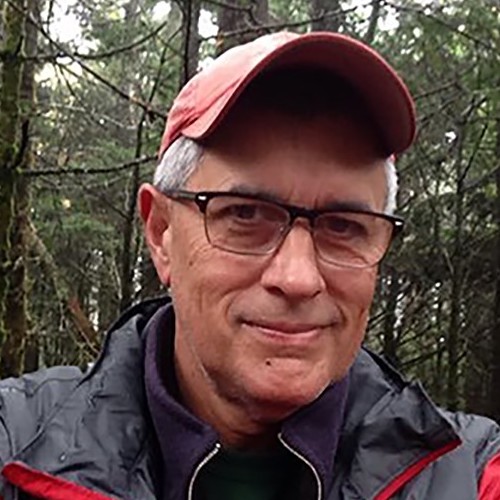
Lap Fai (Craig) Yu, PhD

Title: Assistant Professor, Department of Computer Science

Phone: 703-993-4813

Website: https://cs.gmu.edu/~craigyu

Groups: Faculty

Research Focus

I lead the Design Computing and Extended Reality (DCXR) Group at George Mason University. What will the future of work, entertainment, and everyday life be like 5-10 years from now? To envision the possibilities, my research group conducts research in the following areas: (1) Computer Graphics; (2) Computer Vision; and (3) Human-Computer Interaction & Virtual Reality. Along this research direction, we are also interested in interdisciplinary research in topics such as: (a) Artificial Intelligence & Machine Learning to explore how we can incorporate AI/ML techniques to devise convenient, efficient and powerful design tools; (b) Robotics & Automation to explore how humans and robots can collaborate seamlessly in design and problem-solving; and (c) Cognitive Science to better understand human perception towards everyday surroundings so as to create user-friendly design tools and interfaces.

Current Projects

■ Spatial Computing: we invent computer vision algorithms to achieve 3D reconstruction and affordance analysis of our surroundings and objects; to support virtual reality (VR) and augmented reality (AR) applications.

■ AI for Design: we create creativity support tools driven by artificial intelligence and machine learning techniques to automatically generate designs such as architectural layouts and 3D objects.

■ Computational Interaction: based on human perception data, we devise adaptive user interfaces and user experiences that are optimized to facilitate human-AI collaborations in work and everyday life.

■ Computational and digital, culture, humanities, and the arts, education, engineering.

Select Publications

■ Yu, L.F., et al. (2011). Make it home: Automatic optimization of furniture arrangement. ACM Transactions on Graphics (Proceeding of SIGGRAPH).

■ Feng, T., et al. (2016). Crowd- driven mid-scale layout design. ACM Transactions on Graphics (Proceeding of SIGGRAPH).

■ Zhang, Y., et al. (2019). Pose-guided level design. Proceedings of the ACM Conference on Human Factors in Computing Systems (CHI).

■ Xie, B., et al. (2018). Exercise intensity-driven level design. IEEE Transactions on Visualization and Computer Graphics (TVCG). (Special Issue on IEEE Virtual Reality).

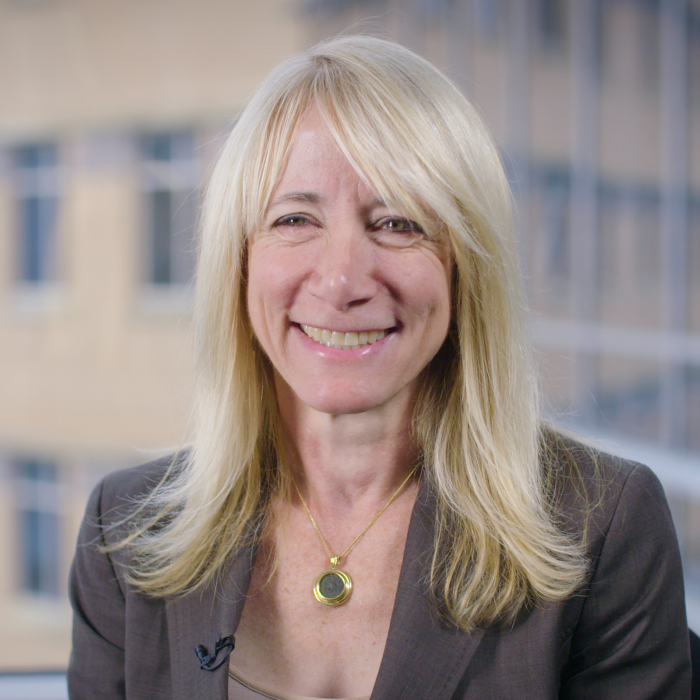
 

Kathryn Laskey, PhD

Title: Professor, Systems Engineering and Operations Research

Phone: 703-993-1644

Website: http://seor.vse.gmu.edu/~klaskey/

Groups: Faculty

Research Focus

As society becomes ever more tightly interconnected, citizens gain instant access to vast stores of knowledge and depend on assistance from a growing array of smart devices. My research helps to turn that expectation into reality. I develop methods for transforming data from a variety of sources into information to answer our questions and improve our decisions. With greater interconnectivity and reliance on technology comes the potential for disruption due to technology failures, natural disasters, or malicious human activity. In addition, I lead the Center for Resilient and Sustainable Societies (C-RASC), which performs research to foster sustainable community resilience in the face of disruptions. I have applied my research to diverse areas, including crisis response planning, analyzing susceptibility to phishing attacks, detecting insider threats in information systems, predicting innovations in science and technology, protecting soldiers from improvised explosive devices, and understanding airline delays.

Current Projects

■ The Collaborative Community Resilience project is developing an iterative five-step, multiscale coordinating framework based on local engagement and leadership to help stakeholders evaluate several platforms for innovation (technologies and other tools) and combine them into capabilities that meet community needs. The framework is being applied and refined through a series of case studies.

■ The Modeling Optimal Drilling Locations [MODL] project is a collaboration with Global MapAid and the Water Technology Institute at Arba Minch University to build a prototype system to fuse sensor data with hydrogeological knowledge to identify optimal locations for Ethiopian small farmers to drill shallow boreholes for sustainable crop irrigation.

■ The Cyber Disaster Resilience project examines resilience of critical infrastructure, with a focus on hospitals, against compound threats that combine cyber attacks with natural disasters.

Select Publications

■ Laskey K.B., et al., (2016). High-Level Fusion for Crisis Response Planning. In Rogova, G. and Scott, P. Fusion Methodologies in Crisis Management: Higher Level Fusion and Decision Making. Springer.

■ Carvalho R.N., et al., (2017). PR-OWL – A Language for Defining Probabilistic Ontologies. International Journal of Approximate Reasoning, 91, 56-79.

■ De Villiers J.P., et al., (2018). Uncertainty Representation and Evaluation for Modelling and Decision-making in Information Fusion. Journal of Advances in Information Fusion, 13(2).

■ Carvalho R.N., et al., (2016). Uncertainty modeling process for semantic technology. PeerJ Computer Science, 2:e77.

Elise Miller-Hooks, PhD

Title: Professor and Bill & Eleanor Hazel Chair, Infrastructure Engineering

Phone: 703-993-1685

Website: https://civil.vse.gmu.edu/miller/

Groups: Faculty

Research Focus
For nearly three decades, I have been applying and advancing concepts of operations research to civil and infrastructure systems applications. What has motivated my research program is a strong desire to make a difference for society. My work with students and post-docs focuses on the development of algorithms and mathematically-based decision support tools for designing, operating, managing, maintaining, and protecting the built environment and the services they facilitate from hazards of natural, technological, accidental or malicious cause.

Current Projects

Chris Kennedy, PhD

Title: Associate Professor, Department of Environmental Science and Policy

Phone: 703-993-5471

Website: https://sites.google.com/site/chrisjkennedy/

Groups: Faculty

Research Focus

I am an economist focused on the economics of natural resource use and the environment. My research interests include the analysis of fisheries management institutions, the valuation of coastal ecosystem services, and the application of behavioral economics theories to issues related to resource management and energy use. I teach graduate and undergraduate courses focused on introducing economic concepts of sustainability, cost-benefit analysis, and market-based mechanisms for managing environmental externalities.

Mills Kelly, PhD

Title: Professor, History and Art History

Phone: 703-887-2884

Website: http://edwired.org

Groups: Faculty

Research Focus

I am a digital public historian working on two distinct projects — a digital history of the Appalachian Trail and a project designed to preserve, in digital form, America’s coastal historic sites that will be lost due to coastal inundation as a result of sea level rise.

Current Projects

■ Appalachian Trail Histories is a digital public history of the Appalachian Trail, America’s oldest and most iconic long-distance hiking trail.

■ Beneath the Waves is a project designed to collect and preserve, in digital form, the history and visual record of coastal historic sites that will vanish due to sea level rise.

Select Publications

■ Kelly, Mills. 2020. The class of ‘51. Appalachia, forthcoming.

■ Kelly, Mills. 2017. Helping students make history. Public History Weekly, 5(19).

■ Kelly, Mills. 2016. Teaching history in the digital age. University of Michigan Press.


Levi Van Sant, PhD

Title: Assistant Professor, School of Integrative Studies

Phone: 703-993-1436

Website: https://integrative.gmu.edu/people/cvansan

Groups: Faculty

Research Focus

I am a human geographer whose work examines the politics of nature, particularly issues surrounding food, agriculture, and land conservation. My research in the US South analyzes the ways that the racial and class dynamics of the plantation past are reproduced in the present, and argues that any meaningful abolition of this legacy will require fundamentally reshaping property relations.

Current Projects

■ Conservation easements are an increasingly common strategy for protecting land from development pressure but there is little analysis of the social and ecological consequences of their spread. Thus, I am working on a collaborative and mixed-methods research project that analyzes the environmental justice implications of conservation easements in coastal Georgia and South Carolina.

■ I am developing a long-term research project on the politics of land, conservation, and development in the Shenandoah Valley of Virginia.

Select Publications

■ Van Sant, L. et al. (2020). Conserving what? Conservation easements and environmental justice in the coastal US South. Human Geography.

■ Van Sant, L. (2019). Land reform and the Green New Deal. Dissent Magazine.

■ Van Sant, L. et al., (2019). Anthropocene, Capitalocene, … Plantationocene?: A manifesto for ecological justice in an age of global crises. Geography Compass, 13(5), e12438.

■ Van Sant, L. (2018). The long-time requirements of the nation: The US cooperative soil survey and the political ecologies of improvement. Antipode.


Xiaoquan Zhao, PhD

Title: Professor, Communication

Phone: 703-993-4008

Website: https://communication.gmu.edu/people/xzhao3

Groups: Faculty

Research Focus

My research focuses on health and risk message design and effects, evaluation of public communication campaigns, health and risk information seeking, information disparities affecting vulnerable populations, news effects on health and risk perceptions, and the role of the self in health behavior and persuasive communication. The substantive topics of my work include smoking, drug use, cancer, medical adherence, and climate change.

Select Publications

■ Zhao, X., & Peterson, E. B. (2017). Effects of temporal framing on response to antismoking messages: The mediating role of perceived relevance. Journal of Health Communication 22(1), 37–44.

■ Zhao, X., Rolfe-Redding, J., & Kotcher, J. (2016). Partisan differences in the relationship between newspaper coverage and concern over global warming. Public Understanding of Science 25, 543-559.

■ Zhao, X., et al. (2015). Cancer information seekers in China: A preliminary profile. Journal of Health Communication 20(5), 616–626.

■ Zhao, X., et al. (2014). Climate change education through TV weathercasts: Results of a field experiment. Bulletin of the American Meteorological Society 95, 117-130.


Kevin Rockmann, PhD

Title: Professor of Management, Dean’s Scholar, School of Business

Phone: 703-993-4988

Website: http://kevinrockmann.com/

Groups: Faculty

Research Focus

My primary research area is psychological attachment and relationship formation and as such I am particularly interested in theories of identity, social exchange, and motivation. I enjoy studying distributed, virtual, on-demand, and other non-traditional work contexts.

Relationships are fundamental to all organizational life, and as such if we can create and sustain high performing, productive relationships organizations and society improve.

Current Projects

■ Pandemic-induced nostalgia: How individuals are coping with their new world of work.

Select Publications

■ Rockmann, K. W., & Northcraft, G. B. (2018). The Dilemma Portfolio: A Strategy to Advance the Study of Social Dilemmas in Organizations. Academy of Management Annals, 12(2), 494-509.

■ Rockmann, K. W., & Pratt, M. G. (2015). Contagious offsite work and the lonely office: The unintended consequences of distributed work. Academy of Management Discoveries, 1(2), 150-164.

■ Rockmann, K. W., & Ballinger, G. A. (2017). Intrinsic motivation and organizational identification among on-demand workers. Journal of Applied Psychology, 102(9), 1305.


John Kotcher, PhD

Title: Research Assistant Professor, Center for Climate Change Communication

Phone: 703-993-3174

Website: https://www.climatechangecommunication.org/team-view/john-kotcher/

Groups: Faculty

Research Focus

I am a Research Assistant Professor at George Mason University‚ Center for Climate Change Communication where I conduct research on science, environmental, and risk communication. My work focuses on how people respond to public engagement by scientists, how to effectively communicate about the public health implications of climate change and air pollution, and how civic organizations can most effectively recruit, organize, and mobilize citizens‚ especially political conservatives‚ demand action on climate change. I also work on the Climate Change in the American Mind project, a series of national public opinion surveys carried out in partnership with the Yale Program on Climate Change Communication to investigate and track public attitudes toward climate change and support for climate policies in the United States.

Select Publications

■ Kotcher, J., et al. (2018). How Americans respond to information about global warming’s health impacts: Evidence from a national survey experiment. GeoHealth, 2(9), 262-275.

■ Kotcher, J., et al. (2019). Fossil fuels are harming our brains: Identifying key messages about the health effects of air pollution from fossil fuels. BMC Public Health, 19(1), 1079.

■ Kotcher, J., et al. (2017). Does engagement in advocacy hurt the credibility of scientists? Results from a randomized national survey experiment. Environmental Communication, 11(3), 415-429.

■ Kotcher, J., et al. (2019). Climate change in the American mind: Data, tools, and trends. Environment: Science and Policy for Sustainable Development, 61(3), 4-18.


Harold Geller, DA

Title: Associate Professor, Department of Physics and Astronomy

Phone: 703-993-1276

Website: http://physics.gmu.edu/~hgeller/

Groups: Faculty

Research Focus

My current focus includes energy and the environment; the search for life in the universe; and the exploration of space. In 2018 I co-authored a textbook on renewable energy. From 2011 through 2015 I served as co-Investigator for the Virginia Initiative for Science Teaching and Achievement (VISTA). From 2012 through today I hold a contract with NASA/JPL to serve as a Solar System Ambassador for education and public outreach. In 2009 and 2010 I was awarded a total of six Telly Awards for online educational videos I co-produced. In 2008, I won the GMU Faculty Member of the Year Award. From 2006 through 2008, I served as Associate Chair of the Department of Physics and Astronomy. Previously, I served as the President of the Potomac Geophysical Society; a public outreach officer for NASA Goddard Space Flight Center; a producer of educational multimedia CD-ROMs; an adjunct faculty member at Northern Virginia Community College; and, a lecturer and operator for the Einstein Planetarium at the National Air and Space Museum. I have authored/edited eight books; and, published over 100 papers in education, astrobiology, astrophysics, and biochemistry.

Current Projects

■ Arlington Public Schools: assessment of the Arlington planetarium

■ Trends and findings of public opinion data regarding space exploration

■ Virginia Earth Science Collaborative: mathematics and science partnership

■ Science Explorers: mathematics and science partnership

Select Publications

■ Geller, H. A. (2019). A solar eclipse teacher workshop, bulletin of the eastern section of the National Association of Geoscience Teachers, 69(1), 2-8.

Ehrlich, R. & Geller, H. A. (2018). Renewable energy, second edition, a first course. CRC Press: Boca Raton, FL. ISBN 978-1-4987-3695-4.

■ Geller, H. A. (2014). Evidence of life on Mars or just another case of pareidolia? Journal of Cosmology, 17: 33-36.