Institute for a Sustainable Earth

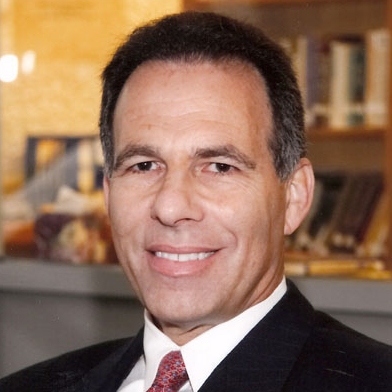
Jack Goldstone, PhD

Title: Eminent Scholar and Hazel Professor, Schar School of Policy and Government

Phone: 703-993-1409

Website: https://jackgoldstone.gmu.edu

Groups: Faculty

Research Focus

I examine how changes in population — in population size, age structure, ethnic and religious composition, and immigration — affect political and economic development over time. I use global data to examine global trends and long-term changes.

Current Projects

■ Global Population and Politics in 2050: a prospective examination of how population trends will affect global stability and prosperity

■ The Rise of the West: a historical study of the conditions that unleashed technological innovation in 18th century Europe

■ Democracy and Development: a new examination using graphic trajectory analysis to uncover the relationship between income growth and democratic institutions

Select Publications
Goldstone, J. A. (2010). The new population bomb: the four megatrends that will change the world. Foreign Affairs, 89, 31.

Goldstone, J. A. (2016). Revolution and rebellion in the early modern world: population change and state breakdown in England, France, Turkey, and China, 1600-1850. New York, NY: Routledge.


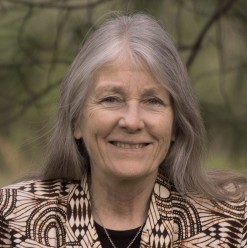
Sally A. Lahm, PhD

Title: Research Associate Professor in the Department of Global and Community Health

Phone: 703-993-3578

Website: https://publichealth.gmu.edu/profiles/slahm

Groups: Faculty

Research Focus
Since 1982, I have been involved in research, consultancies, and nature conservation efforts in African countries. I discovered early in my career that if one does not address and understand human dimensions of conservation, disease transmission, and causes of human dependence and impacts on wildlife, ecosystems and habitats, there will be limited possibility to comprehend biological, ecological and socio-behavioral processes and cycles and find solutions for mitigation, adaptation, and avoidance. My work has involved industries (mining, petroleum, timber), artisanal mining, national government ministries, traditional authorities, and village-level populations. My current project in Ethiopia concerns the distribution, frequency and occurrence of MERS CoV transmission among traditional pastoralists, their livestock, and wildlife, and associated cultural and behavioral aspects. This is similar to research I conducted in Gabon and Guinea on the natural history and socio-cultural determinants of Ebola Virus transmission in wildlife and human communities, respectively.
Current Projects
  • Ecology of Middle East Respiratory Syndrome Coronavirus (MERS CoV) in Camels, Humans, and Wildlife in Ethiopia, October 2018-present

Kelly Schrum, PhD

Title: Associate Professor, Higher Education Program

Phone: 703-993-2310

Website: https://highered.gmu.edu/people/kschrum

Groups: Faculty

Research Focus

My research and teaching focus on the scholarship of teaching and learning and on teaching and learning in the digital age, including online learning, scholarly digital storytelling, and digital humanities. I am the associate editor for Teaching and Learning Inquiry, the journal for the International Society for the Scholarship of Teaching and Learning.

Current Projects

World History Commons, an open educational resource (OER) with high quality, peer-reviewed content in world and global history for teachers, scholars, and students.

■ Scholarly Digital Storytelling, an open educational resource (OER) designed to promote the use of scholarly digital storytelling in higher education across disciplines.

■ Demystifying AI: Interdisciplinary Learning for the Next Generation.

■ Reimagining the History of Higher Education in the Digital Age.

Select Publications

■ Schrum, K. (Forthcoming, 2021). Scholarly digital storytelling: Enhancing academic research and digital literacy.

■ Sleeter, N., et al. (2019). “Reflective of my best work”: Promoting inquiry-based learning in a hybrid graduate history course. Arts and Humanities in Higher Education 19(3), 285-303.

■ Swan, A.K., et al. (2019). Teaching hidden history: A case study of dialogic scaffolding in a hybrid graduate course. International Journal for the Scholarship of Teaching and Learning 13(1).

■ Schrum, K., et al. (2014, 2015). How we learned to drop the quiz: Writing in online asynchronous courses. Web Writing: Why and How for Liberal Arts Teaching and Learning. J. Dougherty & T. O’Donnell (Eds.).


Paul Dirmeyer, PhD

Title: Professor, Department of Atmospheric, Oceanic, and Earth Sciences

Phone: 703-993-5363

Website: http://cola.gmu.edu/dirmeyer/

Groups: Faculty

Research Focus

I study the role of the land surface in the climate system. This includes the development and application of land-surface models, studies of the impact of land surface variability on the predictability of climate, interactions between the terrestrial and atmospheric branches of the hydrologic cycle, and the impacts of land use change on regional and global climate. My research spans time scales from the diurnal (daily) cycle to centuries and spatial scales from hundreds of meters to global.

Current Projects

■ To explore how regional changes in land use could alter land-atmosphere interactions against the backdrop of a warming climate. This includes examination of important climate processes over land within observational data and models to quantify (1) the relationships between soil moisture, vegetation, and surface fluxes; (2) the connection between surface fluxes and the development of the atmospheric boundary layer, clouds and precipitation; (3) the role of the biogeophysical elements in these processes. Regions of strong land-atmosphere feedback in the physical climate system will likely evolve and migrate significantly in a changing climate.

■ Research to enhance our understanding of the connection between droughts and heat waves in the US, and to evaluate the ability of forecast models to predict heat wave occurrence. We evaluate multiple operational and research models from the US and overseas for their ability to predict heat waves following drought events, relate forecast performance to coupled land-atmosphere metrics, and assess how land surface states may affect predictions.

■ To improve US capability to predict weather variability on sub-seasonal time scales arising from soil moisture anomalies, and by better using information from ensembles of different numerical model forecasts to increase prediction skill.

Select Publications

■ Dirmeyer, P. A., et al. (2005). The second Global Soil Wetness Project (GSWP-2): multi-model analysis and implications for our perception of the land surface. Bull Amer Meteor Soc, 87, 1381-1397.

Koster, R. D., et al. (2004). Regions of strong coupling between soil moisture and precipitation. Science, 305(5687), 1138-1140.

Dirmeyer, P. A. (2011). The terrestrial segment of soil moisture–climate coupling. Geophys Res Lett, 38(16).

Dirmeyer, P. A., et al. (2012). Simulating the diurnal cycle of rainfall in global climate models: resolution versus parameterization. Clim Dyn, 39(1-2), 399-418.


John Cook, PhD

Title: Assistant Research Professor, Center for Climate Change Communication

Phone: 703-993-5126

Website: http://www.skepticalscience.com/

Groups: Faculty

Research Focus

My research focus is misinformation about climate change – how to better understand misinformation and develop responses to counter its influence. My research into understanding misinformation includes using machine learning to automatically detect misinforming arguments, content analysis identifying the types of character attacks on climate scientists, and using critical thinking analysis to identify the fallacies within denialist arguments.

Current Projects

■ CARDS (Computer Assisted Recognition of Denial & Skepticism): Using machine learning to detect and categorize climate misinformation, to develop the “holy grail of fact-checking” (automatic detection & refutation of online misinformation)

■ TMEO (Turning Misinformation into an Educational Opportunity): Drawing on my research into misconception-based learning and critical thinking, I developed climate curriculum being implemented and tested in high schools nationally

■ Skeptical Science Experiment: The Skeptical Science website receives 3.7 million visitors per year, mostly from Google searches about climate misinformation. We will collect pre and post-test survey data from visitors, identifying the characteristics of effective debunkings

■ Mobile Serious Game: Developing a mobile game that uses interactive exercises and cartoons to engage students and the general public with the goal of raising critical thinking skills about climate change

Select Publications

Cook, J., et al. (2013). Quantifying the consensus on anthropogenic global warming in the scientific literature. Environmental Research Letters, 8(2), 024024.

Cook, J., et al. (2017). Neutralizing misinformation through inoculation: exposing misleading argumentation techniques reduces their influence. PloS One, 12(5), e0175799.

Cook, J., et al. (2018). Deconstructing climate misinformation to identify reasoning errors. Environmental Research Letters, 13(2), 024018.

Lewandowsky, S., et al. (2017). Beyond misinformation: understanding and coping with the “post-truth” era. Journal of Applied Research in Memory and Cognition, 6(4), 353-369.


Scott Glaberman

Title: Assistant Professor, Ecotoxicology, Molecular and Evolutionary Biology, Environmental Stress Responses

Website: https://science.gmu.edu/directory/scott-glaberman

Groups: Faculty

Research Focus
My research aims to predict how species respond to multiple environmental stressors, including pollution and climate change. We work on species responses across multiple scales, from genomics to physiology to populations. All of the research in my lab is also aimed at delivering better tools to environmental decision makers.
Current Projects
  • Mapping risk of environmental contaminants, including pharmaceuticals, pesticides, and forever chemicals, on human and wildlife health
  • Combining new approaches in toxicology and machine learning to rapidly screen chemical risk to animals
  • Unraveling the basis from increased longevity and low cancer rates in reptiles
  • Harnessing museum specimens to understand how past population crashed can be used to improve sea turtle conservation
  • Predicting the impact of climate change on toxic algal blooms

Ylenia Chiari, PhD

Title: Assistant Professor, Biology

Phone: 703-993-4467

Website: http://www.yleniachiari.it/

Groups: Faculty

Research Focus

There is a lot of variation within and among species. How such a variation is produced, maintained, and used has implications for how long species may potentially live, how they may response to environmental disturbance – including climate change, sea level rise, pollution and urbanization, and in general for their biology, including – but not exclusively – how they communicate, how they use vision, how they escape predators, etc. I study how this incredible variation in morphology, physiology, biology, behavior is produced and why. The results obtained in my work have an impact on species and habitat conservation and on species – including humans – health.

Current Projects

■ Evolution of color and color pattern in geckos.

■ Conservation genetics of endangered turtles.

■ Aging, longevity and cancer.

■ Reptile sensory ecology.

Select Publications

■ Allen, W. L., et al. (2019). Ecological, behavioral, and phylogenetic influences on the evolution of dorsal color pattern in geckos. Evolution, 74: 1033-1047.

■ Chiari, Y. (2019). Isolating and quantifying the role of developmental noise in generating phenotypic variation. PLOS Computational Biology, 29(6), 1287-1301.

■ Chiari, Y., Glaberman, S., and Lynch, V.J. (2018). Insights on cancer resistance in vertebrates: Reptiles as a parallel system to mammals. Nature Reviews Cancer, 18(8), 525-525.

■ Quesada, V. et.al. (2019). Giant tortoise genomes provide insights into longevity and age-related disease. Nature Ecology & Evolution, 3(1), 87–95.


Dorin Marcu, PhD

Title: Associate Research Professor, Learning Agents Center

Phone: 703-993-1535

Website: http://lac.gmu.edu/dmarcu/

Groups: Faculty

Research Focus

My work has contributed to research areas that are viewed as key enablers for the development of cognitive agents, and for the generalized application of artificial intelligence to complex realworld problems, including mixed-initiative human computer interaction, knowledge acquisition of problem solving expertise from human subject matter experts, knowledge engineering, evidence-based reasoning and assumption-based reasoning. As part of my research work I have also contributed to the development of several successive generations of learning agent shells and of cognitive agents developed with them (Disciple, Cogent).

Select Publications

■ Meckl S., et al. (2020). Automating the Investigation of Sophisticated Cyber Threats with Cognitive Agents, in Dasgupta P., Collins J., and Mittu R. (Eds.) Adversary- Aware Learning Techniques and Trends in Cybersecurity. Springer.

■ Tecuci G., et al. (2019). Instructable cognitive agents for autonomous evidence based reasoning. Advances in Cognitive Systems, 8.

■ Tecuci G., et al. (2016). Knowledge Engineering: Building Personal Learning Assistants for Evidence based Reasoning. Cambridge University Press.

■ Tecuci G., et al. (2016). Intelligence Analysis as Discovery of Evidence, Hypotheses, and Arguments: Connecting the Dots. Cambridge University Press.


Susan Howard, PhD

Title: Term Faculty, Health, Medicine & Society, School of Integrative Studies

Phone: 703-993-9365

Website: https://www.linkedin.com/in/susan-howard-mph/

Groups: Faculty

Research Focus

I am an applied researcher and problem-solver who teaches, mentors, and creates at the nexus of academia, industry, and entrepreneurship. I combine theories from behavioral sciences with best practices in emerging technologies, human-centered design, and business innovations to design solutions that address pressing health and environmental issues, both globally and locally. My current work leverages game-based simulations in Direct-to-Consumer (DTC) innovations. As the principal investigator of an interdisciplinary USAID-funded 5-year innovation grant, I am driving the design and implementation of choice-based simulations to influence, as well as assess, perceptions, attitudes, and knowledge of health behaviors among adolescents in India. Similarly, my PhD research applies game-based simulation as both an educational tool and research instrument seeking to: 1) reveal human perceptions related to wildlife and disease causation 2) elucidate rationale behind park visitors’ behaviors and 3) evaluate emerging technologies as instruments for behavior change. I seek to understand how healthy behaviors and conservation practices may align with an individual’s values and self-interests, thereby encouraging a One Health approach that links human health with ecosystem health.

Current Projects

■ Pioneering use of game-based simulations to assess rationale and perceptions of non- compliant behaviors as related to disease risk among visitors to the Chesapeake and Ohio (C&O) Canal National Park.

■ Applying social marketing approaches to One Health problems by incorporating a “self-interest” model to encourage behavior change.

■ Direct-to-Consumer approaches using digital game technology to improve adolescent health.

■ Gamification of training to influence USAID government officials to foster a human centered design approach in designing health interventions.

Select Publications

■ Howard, S., & Livermore, M. (2016). Applications of marketing practices and agent-based modeling to promote the principles of One Health in the C&O Canal National Historic Park. Prepared for the C&O Canal National Historic Park & Wildlife Biology and Public Health Divisions of the National Park Service.

■ Howard, S. Mustafa, S. (2016). EcoTEX Academy: STEM in Nature. A prototype for place-based experiential learning. Prepared for the National Park Service Wildlife Biology Division, Office of Public Health and Conservation Stewardship Division.

■ Howard, S., et al. (2013). Mind the gap: Uttar Pradesh Program Review. Prepared for the Bill & Melinda Gates Foundation.


Benjamin Cash, PhD

Title: Research Associate Professor, Department of Atmospheric, Oceanic, and Earth Sciences

Phone: 703-993-5744

Groups: Faculty

Research Focus

In 2018, Cape Town, South Africa, narrowly avoided becoming the first major metropolitan area to run out of water. This city of four million people and its surrounding region was suffering through a severe rainfall shortage, or drought, that had lasted for almost three years. Only by enacting severe restrictions on water use were they able to avoid what came to be called Day Zero: the day when the taps would go dry.

My research focuses on understanding the causes and predictability of both floods and droughts. I analyze data from observations as well as from multiple climate models, which are complex numerical representations of the climate system. In addition to understanding droughts and floods themselves, I also research how they can act to drive outbreaks of infectious disease.

Current Projects

■ Understanding the origins and future likelihood of the Day Zero Cape Town drought and similar water risks facing major metropolitan regions

■ Understanding the role of El Niño and precipitation extremes in the western United States through the application and analysis of seasonal forecast models

■ Improving tools for analyzing Big Data in the Earth Sciences in collaboration with colleagues at CSISS

■ Using climate information to increase community resilience through better understanding of the impact of climate variability on human health

Select Publications

Cash, B. A., & Burls, N. J. (2019). Predictable and unpredictable aspects of US west coast rainfall and El Niño: understanding the 2015/16 event. Journal of Climate, 32(10), 2843-2868.

Cash, B. A., et al. (2017). Evaluation of NMME temperature and precipitation bias and forecast skill for South Asia. Climate Dynamics, 1-18.

Martinez, P. P., et al. (2017). Cholera forecast for Dhaka, Bangladesh, with the 2015-2016 El Niño: lessons learned. PloS One, 12(3), e0172355.

Cash, B. A., et al. (2013). Malaria epidemics and the influence of the tropical South Atlantic on the Indian monsoon. Nature Climate Change, 3(5), 502.