Institute for a Sustainable Earth

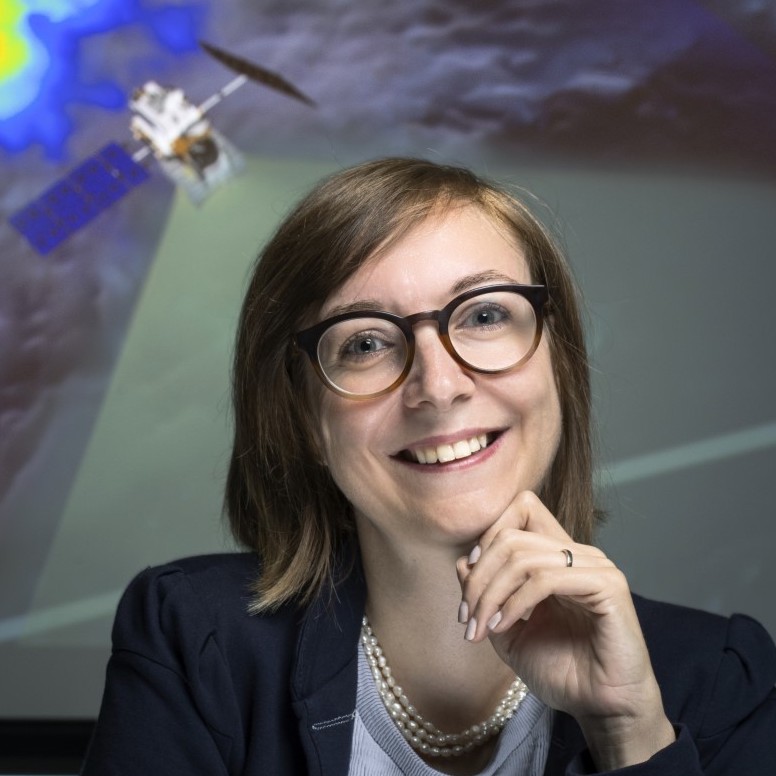
Pramita Bagchi, PhD

Title: Assistant Professor, Department of Statistics

Phone: 703-993-1674

Website: https://pramitabagchi.squarespace.com/

Groups: Faculty

Research Focus

My research focuses on developing methodology for analyzing high dimensional dependent data. Dependence is a natural phenomenon occurring in several real-life scenario, specifically in data observed over time or in a spatial context. Ignoring this underlying spatial and temporal dependence structure leads to incorrect result in inference and prediction problem. The severity of dependence may drastically affect the behavior of the estimators. Moreover, the behavior of the observations may change over time or based on geographical location. Often spatial and temporal dependence affect each other. I am interested in such interesting dynamics. With modern technology, we now have access to high resolution data. The classical set-up allows analysis only for the case where the sample size is larger than the dimension of the observation, which is not realistic for complex object. I incorporate the natural smooth structure of the data generating process and treat the data as functions. Some interesting examples include satellite images, daily weather curve, demographic curves etc. I develop computationally efficient statistical methodologies to analyze such data.

Current Projects

■ Adaptive frequency band estimation for spatio-temporal data: Spectral density is an important tool in understanding and modelling time series. The spectral density is often summarized by frequency bands, averaged over specified frequency range. We are developing a data-driven method to estimate the band structure that best summarizes variability in spatio-temporal data.

■ Detection of heterogeneous regions in spatial-spectral domain.

■ Modelling and inference for high dimensional time series with changing variance.

■ Spatio-temporal modelling of urban transport system for better prediction and inference.

Select Publications

■ Bagchi, P. and Dette, H. (2019). A test for separability in covariance operators of random surfaces. The Annals of Statistics, forthcoming.

■ Bagchi, P. and Subhra Sankar Dhar. (2020). A study on the least square estimator of multivariate isotonic regression function. Scandinavian Journal of Statistics, forthcoming.

■ Bagchi, P., et al. (2018). A simple test for white noise in functional time series. Journal of Time Series Analysis, 39, 54-74.

■ Bagchi, P., et al. (2016). Inference for monotone functions under short- and long-range dependence: Confidence intervals and new universal limits. Journal of the American Statistical Association, 111(516), 1634-1647.
 

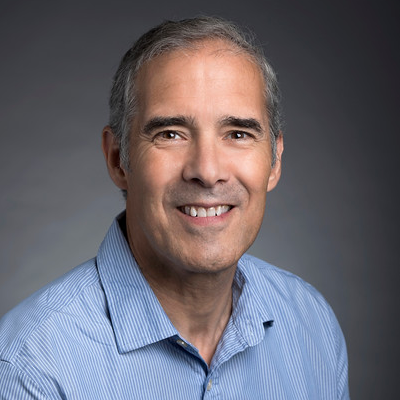
Kerri LaCharite, PhD

Title: Assistant Professor, Nutrition and Food Studies

Phone: 703-993-2740

Website: https://nutrition.gmu.edu/profile/view/253531

Groups: Faculty

Research Focus

Human behavior, including agricultural practices and eating habits has long been recognized as the root of environmental degradation. Consumption of refined sugars, refined fats, and meat are increasing with a global rise of incomes and urbanization. Projections estimate an 80% increase in greenhouse gas emissions from food production by 2050. Additionally, these dietary trends are driving the rate of diabetes, chronic heart disease and other chronic non-communicable diseases.

Studies have demonstrated how school gardens can have a positive effect on knowledge, preference, and consumption of fruits and vegetables. College farms and gardens produce similar results. Students who participate report an increase of buying and eating fresh fruits and vegetables. The experience changes what they want to eat and what “tastes good”. But the missing gap in the literature in both school gardens and college farms is understanding precisely why the changes in eating behaviors occurred. My research shows the formation of emotional attachments plays a significant part of those changes at the elementary school and college levels.

Current Projects

■ Collaboration with Carley Maltese-Fisher in Early Childhood Education and the Office of the State Superintendent of Education in Washington, D.C. to study direct and indirect outcomes, including place attachment, science learning, and eating behaviors of school gardens.

■ Virginia Food Systems Leadership Institute is a multidisciplinary project of Virginia’s public universities with the aim to foster rising leaders in the area of sustainable food systems and the emerging local food economy in the Commonwealth. Practical models for transforming food service procurement can provide a useful tool for overcoming barriers that currently prevent dining services providers from spending a higher percentage of their budget on local and sustainably produced food.

Select Publications

■ LaCharite, K. (2016). Re-visioning agriculture in higher education: the role of campus agriculture initiatives in sustainability education. Agriculture and Human Values, 33(3), 521-535.

■ LaCharite, K. (2016). Growing a culture of sustainability: urban agriculture experiences and undergraduate student perceptions and behaviors. In M. Barnett et al. (Eds.), Urban Agriculture and STEM Learning, New York, NY: Springer.


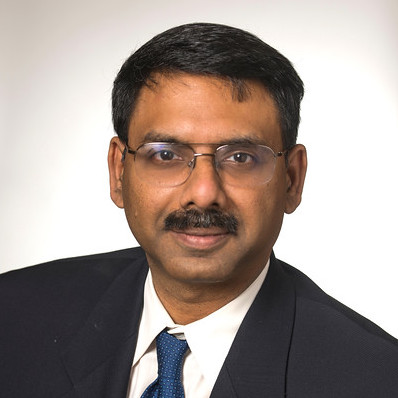
Jagadish Shukla, PhD

Title: University Professor, Department of Atmospheric, Oceanic, and Earth Sciences

Phone: 703-993-5700

Website: cola.gmu.edu/shukla/

Groups: Faculty

Research Focus

Scientific contributions include studies of monsoons, deforestation, and predictability of weather and climate. My research led to the notion of Predictability in the Midst of Chaos, which established that in spite of the chaotic nature of weather (the Butterfly Effect), there is a scientific basis for prediction of short-term climate variations. My colleagues and I are engaged in research on predictability and prediction of weather and climate from days to weeks, at regional and global spatial scales.

Current Projects

■ HMA-LDAS: Hyper-resolution High Mountain Asia – Land Data Assimilation System.

■ Next-Generation Large-Scale Fractional Freeze/Thaw Analysis.

■ Advancing hydrologic modeling in High Mountain Asia by merging and downscaling satellite- based precipitation products.

■ Enabling Sustainability in High Mountain Asia: Mapping Permafrost Degradation using Satellite Data Assimilation.

Select Publications

■ Motesharrei, S., et al. (2016). Modeling sustainability: Population, inequality, consumption, and bidirectional coupling of the Earth and Human Systems. National Science Review, 3(4), 470-494.

■ Huang, B., et al. (2017). Reforecasting the ENSO events in the past 57 years (1958– 2014). Journal of Climate, 30(19), 7669-7693.

■ Shukla, J., et al. (2010). Toward a new generation of world climate research and computing facilities. Bulletin of the American Meteorological Society, 91(10), 1407- 1412.

■ Shukla, J., et al. (2009). Strategies: Revolution in climate prediction is both necessary and possible: A declaration at the world modelling summit for climate prediction. Bulletin of the American Meteorological Society, 90(2), 175-178.


Michael Bloom, PhD

Title: Associate Professor, Global and Community Health

Phone: 703-993-8588

Website: https://chhs.gmu.edu/profiles/mbloom22

Groups: Faculty

Research Focus

I have great interest in the impact of endocrine disrupting chemicals on human reproduction and development. Much of my research focuses on measuring environmental pollutants in biological specimens, such as blood and urine, and relating the concentrations to reproduction-related endpoints, including pregnancy, birth weight, preterm birth, and birth defects. For example, my work has evaluated how industrial pollutants like polychlorinated biphenyls, perfluorinated alkyl substances, and heavy metals affect fertility and fetal development, the impact of lipids and micronutrients on in vitro fertilization (IVF), how chemicals commonly found in plastics and personal care products contribute to reproductive health disparities, and how air pollutants and greenspace affect chronic health conditions in children and adults. These investigations are of great public health importance, because of the widespread nature of the environmental exposures, in the United States and elsewhere, and the vulnerability of mothers, fetuses, and disadvantaged groups.

Current Projects

■ “Racial Disparities Associated with Maternal Exposure to Environmental Endocrine Disrupting Compounds in a Southeastern U.S. Community,” evaluates the effects of gestational exposure to environmental phenols and phthalates on fetal development in African American and white mothers, and explores effects of co-exposure to the mixture.
■ “ECHO Consortium on Perinatal Programming of Neurodevelopment,” collects sociodemographic, medical, lifestyle, and environmental data, measures anthropometry, and gather biospecimens to investigate the impact of environmental pollutants on child development.
■ “Exposome Contributors to Child Health Originating from National Fetal Growth Study (ECCHONFGS),” investigates associations between maternal exposure to environmental pollutants during pregnancy and their children’s health outcomes.

Viviana Maggioni, PhD

Title: Assistant Professor, Department of Civil, Environmental, and Infrastructure Engineering

Phone: 703-993-5117

Website: https://maggioni.vse.gmu.edu/

Groups: Faculty

Research Focus

My research team’s activities span from the local scale, by monitoring and modeling stormwater quantity and quality at the Mason main campus with state-of-the-art sensor networks, to the global scale, combining water resources engineering with hydrometeorology and remote sensing using satellite data to evaluate conditions in remote regions, where ground truthing is impossible, but where environmental and health consequences can be devastating.

Current Projects

■ We study surface flux, snow/ice storage, and water balance changes in High Mountain Asia (HMA) and investigate the causality of these changes at the regional to local scale. We are developing a high-resolution Land Data Assimilation System, forced by physically downscaled surface meteorology, parameterized by remotely sensed topography and vegetation, and constrained by remotely sensed snow, temperature, and glacier observations.

■ We develop innovative terrestrial phenology data assimilation techniques to integrate satellite- based vegetation observations into a modeling framework to improve our estimation of hydrological variables globally. A better characterization of terrestrial water, energy, and carbon cycles through the integration of observations into models at spatial and temporal scales conducive to decision making and adaptation responses are essential to socio-ecosystem sustainability.

■ As water in various components of the landscape freezes, its movement is largely curtailed with impacts on climate, hydrology, ecology, and biogeochemical processes. We are exploring the potential of developing a global, high resolution fractional Freeze/Thaw product that moves beyond current binary methods by representing intermediate phases between frozen and thawed states. This includes identifying responses of various types of frozen or thawed ground that can vary temporally, with depth, and widely over varying landscape properties.

Select Publications

■ Solakian, J., et al. 2019. Investigating the use of satellite-based precipitation products for monitoring water quality in the Occoquan Watershed. Journal of Hydrology: Regional Studies, 26.

■ Maggioni V., et al. 2014. An error model for uncertainty quantification in high-time resolution precipitation productsJournal of Hydrometeorology, 15(3), pp.1274–1292.

■ Falck A., et al. 2015. Propagation of satellite precipitation uncertainties through a distributed hydrologic model: A case study in the Tocantins-Araguaia basin in Brazil. Journal of Hydrology, 527, pp.943–957.


Anthony Falsetti, PhD

Title: Associate Professor, Forensic Science Program

Phone: 703-993-6091

Groups: Faculty

Research Focus

I am currently performing research in microbiomes and their utility in determining the postmortem interval and geolocating with specific applications to border crossing deaths and unidentified persons, human facial growth in human children using 3D CT scan technology, and using SEM and XRF to study bone trauma. I have been deployed to many mass fatality situations including military mishaps, commercial airline mass disasters (American Eagle, TWA 800), domestic terrorism (Oklahoma City Bombing), foreign terrorism (World Trade Center), and natural disasters (GA Floods, Thai Tsunami and Haitian Earthquake). In Bosnia and Herzegovina, I was the Deputy Director for the Forensic Department of the International Commission on Missing Persons where I managed mortuaries and field teams whose mission was to excavate, recover and identify victims from the Bosnian Conflict 1992 to 1996. I apply forensic science principles to the collection of evidence, identification of victims of genocide and other mass fatality incidents in order to support the stated goals of the Declaration of Human Rights and the families rights to know the fate of their loved ones.

Current Projects

■ A project to study how microbes can be used to geolocate individuals.

■ Research in better facial approximation methods to identify unidentified decedents.

■ Using processing mining on Cold Cases.

■ Experimenting with SEM to detect evidence of gunshot wounds on bones.

Select Publications

■ Simmons-Ehrhardt, T., et al. (2018). Open-source tools for dense facial tissue depth mapping of computed tomography models. Human Biology, 90(1), 63-77.

■ Falsetti, A.B., et al. (2019). Scanning electron microscopes with energy dispersive x-ray spectroscopy (SEM/EDX) analysis of gunshot residue (GSR) on pig bone, poster presented at the Annual Meeting of the American Academy of Forensic Sciences.

■ Falsetti, C.R., et al. (2017). Forensic art and imaging: Best practices for evidence handling. Forensic Evidence Management, pp. 163-170.

■ Coble, M. D., et al. (2009). Mystery solved: the identification of the two missing Romanov children using DNA analysis. PLOS ONE, 4(3).


Padhu Seshaiyer, PhD

Title: Professor, Mathematical Sciences

Phone: 703-993-9787

Website: http://math.gmu.edu/~pseshaiy/

Groups: Faculty

Research Focus

I have initiated and directed several research and educational programs including graduate and undergraduate research, K-12 outreach, teacher professional development, and enrichment programs to foster the interest of students and teachers in STEM at all levels. My research in computational mathematics includes the development of new analytical techniques and efficient algorithms to obtain numerical solutions to differential equations describing multi-physics interactions. My research in computational bio-mechanics includes developing, extending and applying mathematics for the purposes of better understanding the physiology and pathophysiology of the human vascular system. My research in teacher education involves studying effective pedagogical practices to improve student learning. I am also engaged in applying design and systems thinking to solve complex challenges such as the SDG2030 goals using STEM based solutions. Integrated with the research plan is an education plan where the primary goal is to teach students and teachers at all levels to apply well-developed research concepts, to fundamental applications arising in STEM disciplines.

Current Projects

■ The proposed RAPID research on ”Modeling, Analysis and Control of COVID-19 Spread in an Aircraft Cabin using Physics Informed Deep Learning”, will build a robust, reliable and scalable computational software that can be used to predict the spread of COVID-19 in an aircraft cabin.

■ The IMMERSION (Investigating Mathematical Modeling, Experiential Learning and Research through Professional Development and an Integrated Online Network for Elementary Teachers) project will design and deliver professional development for elementary grades mathematics teachers and will result in curriculum modules.

■ The Impact of COVID-19 on the UN Sustainable Development Goals.

Select Publications

■ Seshaiyer, P. and McNeely, C.L. (2020). Challenges and opportunities from COVID‐19 for global sustainable development. World Medical & Health Policy.

■ Seshaiyer, P. and Lenhart, S. (2020). Connecting with teachers through modeling in mathematical biology. Bulletin of Mathematical Biology, 82, 98.

Matto, H. and Seshaiyer, P. (2018). Harnessing the power of the recovering brain to promote recovery commitment and reduce relapse risk. Journal of the Society for Social Work and Research 9(2), 341-358.