Institute for a Sustainable Earth

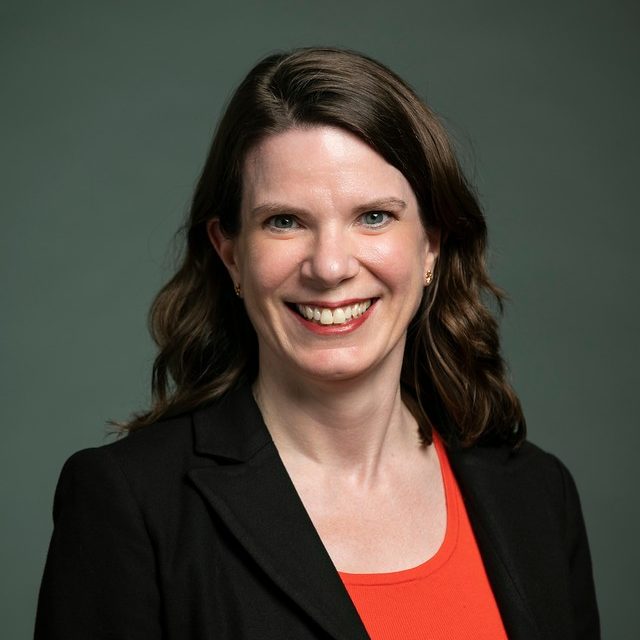
Hannah Torres, PhD

Title: Assistant Director for Research Operations, Center for Resilient and Sustainable Communities

Phone: 703-993-6286

Website: https://orcid.org/0000-0002-3315-5303

Groups: Faculty

Research Focus

As Assistant Director for Research Operations with the Center for Resilient and Sustainable Communities (C-RASC), I work to connect researchers from across disciplines with community partners to collaboratively solve problems that can help communities build on existing strengths and learn from new challenges to emerge stronger than ever.

My own research is informed by my background in environmental science and policy, geography, and education and driven by 3 core principles: 1) meaningful community and stakeholder engagement; 2) mixed-method, transdisciplinary approaches; and 3) leveraging technology. Some of my most recent work explored local priorities for estuary restoration, marine debris prevention, and climate change adaptation using methods such as participatory mapping, focus groups, surveys, and interviews.

Current Projects

■ Community GIS and citizen science research experience for undergraduates and teachers in Belize.

■ Exploring the role of sense of place in coastal restoration in the Indian River Lagoon, FL.

Select Publications

■ Torres, H. et al. (2019). Examining youth perceptions and social contexts of litter to improve marine debris environmental education. Environmental Education Research, 25(3), 1-16.

■ Torres, H. and Alsharif, K. (2017). What it means to become “more resilient”: An analysis of local resilience- building approaches in three Florida communities. Weather, climate, and society, 9(3), 405-419.

■ Saylor, C.R., Alsharif, K., Torres, H. (2017). The importance of traditional ecological knowledge in agroecological systems in Peru. International Journal of Biodiversity Science, Ecosystem Services & Management, 13(1). 150-161.
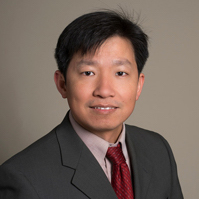
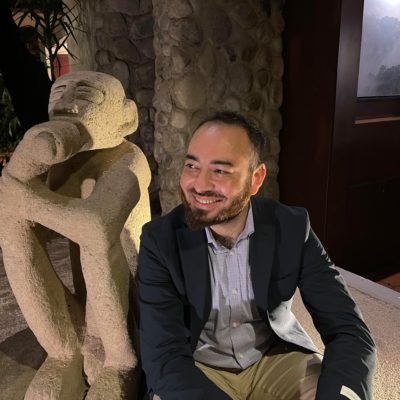
 

Qiliang Li, PhD

Title: Professor, Electrical and Computer Engineering

Phone: 703-993-1596

Website: https://ece.gmu.edu/~qli/

Groups: Faculty

Research Focus

I design and fabricate sensors, integrate sensors into a smart sensor system to monitor the chemicals and pollution in the environment. In addition, my research focuses on self-powered, autonomous-driving monitoring platforms for aquatic ecosystems.

Current Projects

■ Topological insulator field effect transistors for memory and sensors (NSF research grant).

■ Nanoengineered hybrid gas sensors for spacesuit monitoring.

■ Graphene chemical sensors for precise discrimination.

Select Publications

■ Shi, C., et al. (2018). Precise gas discrimination with cross-reactive graphene and metal oxide sensor arrays. Applied Physics Letters, 113(22), 222102.

■ Ye, H., et al. (2018). Enhance the discrimination precision of graphene gas sensors with a hidden markov model. Analytical Chemistry, 90(22), 13790-13795.

■ Khan, M. A. H., et al. (2019). Recent advances in electrochemical sensors for detecting toxic gases: NO2, SO2 and H2S. Sensors, 19(4), 905.

■ Yuan, H. et al. (2018). A hierarchical vision-based localization of rotor unmanned aerial vehicles for autonomous landing. International Journal of Distributed Sensor Networks, 14(9).


Muhammad Salar Khan, PhD

Title: Postdoctoral Fellow, Schar School of Policy and Government

Website: https://scholar.google.com/citations?user=SIi_sSUAAAAJ&hl=en

Groups: Faculty

Research Focus

I am a Don E. Kash Postdoctoral Fellow in Science and Technology Policy at the Schar School of Policy and Government, George Mason University. I recently completed PhD in Public Policy from Schar School. Earlier, I earned a masters degree in Public Policy (Economic Policy) as a Fulbright scholar at Oregon State University and a bachelors degree in Economics and Politics from Lahore University of Management Sciences, Pakistan.

My PhD dissertation analyzes the link between innovation and economic development in a comparative context. While I am passionate about international development, I also conduct interdisciplinary research on AI, clean energy, agricultural innovation, and public health issues. Besides teaching and graduate research assistant positions in graduate schools, I have worked with several organizations, including the British Council, the Parliament of Pakistan, and the World Bank. My recent articles appeared in the Journal of International Tax and Public Finance, Structural Change and Economic Dynamics, PLOS ONE, Economies, Science of the Total Environment, Frontier Journals, The Diplomat, The National Interest, and The Conversation. I tweet at @salarppolicy

Current Projects
  • How to engage the Global South in clean energy transition dialogue?
  • How to diffuse AI-operated technologies and capabilities in the US Government?
  • How to strengthen innovation capabilities in low- and middle-income countries?

Shima Mohebbi, PhD

Title: Assistant Professor, Systems Engineering and Operations Research

Phone: 703-993-3069

Website: https://volgenau.gmu.edu/profiles/smohebbi

Groups: Faculty

Research Focus
I develop scalable optimization models and data analytics to address grand engineering challenges focusing on societal needs. I am motivated to understand how decision-makers’ behavior, coupled with the inherent uncertainty in environmental systems, impacts the design and operations of cyber-physical systems. I am also passionate about engineering education and community outreach activities.

Current Projects
  • CRISP Type 2: Integrative Decision Making Framework to Enhance the Resiliency of Interdependent Critical Infrastructures
  • Development of User-Friendly Tools And Decision-Making Algorithms For Service Life Design of ABC Bridges
  • DISES: Conservation incentives and the socio-spatial dynamics of water sustainability

Louise Shelley, PhD

Title: Omer L. and Nancy Hirst Endowed Chair and University Professor, Schar School of Policy and Government

Phone: 703-993-9749

Website: http://traccc.gmu.edu/

Groups: Faculty

Research Focus

My research examines the illicit trade in all forms of natural resources — fish, wildlife, timber, metals and other natural commodities. It studies the patterns of this trade as well as their impact on human and political security. Illicit trade was probably at the heart of the COVID-19 pandemic as illicit trade of animals in wet markets may have led to the initial transmission of the COVID-19 virus. This is why my book on illicit trade, Dark Commerce: How a New Illicit Economy Threatens Our Future saw the great harm and threatening consequences that could result from diverse forms of illicit trade including natural resources. My research focuses on how this illicit trade in natural resources is deeply tied to corruption. I also examine the illicit financial flows associated with the illicit trade in natural resources.

Current Projects

■ Corruption and Resource Governance – USAID project (subgrantee to WWF): The purpose of the Targeting Natural Resource Corruption (TNRC) project is to strengthen USAID’s efforts and those of a wider community of NRM and anti-corruption stakeholders to improve natural resource management (NRM) outcomes by reducing threats posed by corruption to wildlife, fisheries and forests. TNRC will focus on harnessing existing knowledge, delivering new thought leadership and strengthening evidence on effective approaches to anti-corruption issues in NRM; leveraging practitioner and stakeholder networks for knowledge dissemination and improved anti-corruption; deepening global partnerships to combat corruption in the management of natural resources; and more effective anti-corruption programming on the ground.

Select Publications

■ Shelley, L. (2018). Dark Commerce: How a New Illicit Economy Is Threatening Our Future. Princeton University Press.

■ Shelley, L. (2018). Corruption and Illicit Trade. Daedalus Summer, 147(3), 127–143.

■ Shelley, L. (2014). Dirty Entanglements: Corruption, Crime, and Terrorism. Cambridge University Press.

■ Shelley, L. (2017). Human Trafficking at Sea. WSQ, 45, No. 1-2, 305-309.

■ Shelley, L. & Kinnard, K. (2018). The Convergence of Illicit Wildlife Trade with other Forms of Criminality. In Wildlife Crime: From Theory to Practice, ed. William D. Moreto. Temple University Press.


Jennifer L Salerno, PhD

Title: Assistant Professor, Environmental Microbiology, Marine Biology, Coral Reef Ecology

Phone: 703-993-3457

Website: https://science.gmu.edu/directory/jennifer-salerno

Groups: Faculty

Research Focus

Dr. Salerno is an Assistant Professor in the Department of Environmental Science and Policy where she teaches Environmental Microbiology and Coral Reef Ecology courses. Her research interests focus on symbiotic and free-living microorganisms and the role that they play in maintaining and destabilizing organism health and ecosystem function. Recognizing the important link between human health and ecosystem health, this research is approached through the lens of seeking to advance basic science, while also developing environmental monitoring tools, practical applications, and policy guidance for environmental resource management and conservation. Dr. Salerno uses traditional microbiological techniques, as well as molecular biology, next generation sequencing, bioinformatics, and microscopy to characterize microbial (bacterial, archaeal, and fungal) diversity and function in organismal and environmental microbiomes and how they respond to environmental change (temperature, sedimentation, chemical exposure). Previous projects have focused on characterizing the biogeography of bacterial communities associated with reef-building corals in the Pacific and how these communities respond to environmental change; the transmission and nutritional contribution of bacterial symbionts in deep-sea bivalves; mapping the microspatial distribution of soil microorganisms; and the impacts of hydrocarbons and chemical dispersant on the structure and function of deep-sea coral and shipwreck microbial communities. The Salerno Laboratory is currently working on projects pertaining to coral disease, impacts of stream restoration on forest oil microbes, and microbes as biological indicators of aquatic health.

Dr. Salerno also engages in science communication and interdisciplinary work at the intersection of science, policy, and diplomacy. She previously worked on coastal and ocean issues in the U.S. House of Representatives as a NOAA Sea Grant Knauss Fellow and served as an American Association for the Advancement of Science (AAAS) Science and Technology Policy Fellow at the U.S. Department of State, Bureau of East Asian and Pacific Affairs, Office of Economic Policy. In this capacity she advised and coordinated U.S. policy on science and technology, energy, and oceans issues across U.S. federal agencies and in the Asia Pacific Economic Cooperation (APEC).

Current Projects
  • Molecular and Microscopic Investigation of Stony Coral Tissue Loss Disease on Florida’s Reef

Kirin E. Furst, PhD

Title: Assistant Professor, Civil, Environmental & Infrastructure Engineering

Phone: 703-993-3394

Website: https://waterchemlab.vse.gmu.edu

Groups: Faculty

Research Focus

The main goals of my research are improving access to safe drinking water and mitigating harmful impacts of human activities on water quality. Current projects in my research group include evaluating the efficacy of low-cost disinfection technologies and developing new approaches to identify which contaminants in drinking water pose the greatest risk to human health. If we know which contaminants to prioritize for removal, we can develop smarter treatment and policy approaches to protect our waters. My research group is especially interested in the impacts of municipal and industrial wastewaters on drinking water and the environment, and ensuring the safety of wastewater reuse to supplement water supplies as climate change increases water scarcity.

My research group, the Water Systems Chemistry Lab, is located at the GMU Potomac Science Center. We offer expertise in the analysis of trace organic contaminants and a wide range of water quality parameters, as well as experience in modeling large water quality datasets.

Current Projects
  • Byproduct formation during drinking water disinfection with chlorocyanurates
  • Nutrient removal from storm sewer base flows
  • Disinfection byproduct dynamics in distribution systems and implications for human exposure

Denise A. Hines, PhD

Title: Associate Professor, Department of Social Work

Phone: 703-993-2024

Website: https://chhs.gmu.edu/profiles/dhines2

Groups: Faculty

Research Focus
My research focuses on the causes, consequences, and prevention of various forms of interpersonal violence, such as domestic violence, family violence, sexual assault, and stalking. I am especially interested in victims that are not typically recognized or served by our service systems, such as heterosexual men and sexual minorities. I research their relationship experiences, what happens when they seek help, and ways to improve our responses to these victims and their children. I am also interested in the intersection of interpersonal violence with other social issues, such as substance use, guns, and suicide. I co-directed a nationally-recognized college sexual assault prevention program and am looking to expand those efforts into other populations.

Current Projects
  • Suicidal and Help-Seeking Behaviors Among Male Victims of Intimate Partner Violence
  • Handbook of Men’s Victimisation in Intimate Relationships — edited book

R. Christian Jones, PhD

Title: Professor and Director, Potomac Environmental Research and Education Center

Phone: 703-655-0379

Website: https://cos.gmu.edu/perec/?utm_medium=redirect&utm_source=college+of+science&utm_campaign=su18+perec

Groups: Faculty

Research Focus

My work has focused on the Potomac River and its watershed. My most extensive project is the long term study documenting the recovery of the tidal Potomac River from nutrient over enrichment and subsequent eutrophication. My major finding has been that the stringent nutrient controls on sewage discharges that went into place in the early 1980’s have resulted in greatly improved water clarity and a major restoration of aquatic plant communities and animal habitat in the tidal Potomac River.

I have also studied the impacts of watershed suburbanization on streams and the ecology of stormwater management ponds which now dot our landscape.

Current Projects

■ An Ecological Study of Gunston Cove (continuous since 1984)

■ An Ecological Study of Hunting Creek (continuous since 2013)

■ Ecology of Benthic Cyanobacteria in the Tidal Occoquan River

Select Publications

■ Jones, R.C. (2020). Recovery of a tidal freshwater embayment from eutrophication: a multidecadal study. Estuaries and Coasts 43, 1318-1334.


Lester Kurtz, PhD

Title: Professor, Department of Sociology and Anthropology

Phone: 202-370-7806

Website: https://works.bepress.com/lester_kurtz/

Groups: Faculty

Research Focus

My research focus involves cultural and religious foundations of violence – including violence against the environment and the interaction among various kinds of violence (direct, structural, cultural, and ecoviolence) are being addressed by nonviolent alternatives. I am studying those alternatives and the nature of violence and how people are transforming society toward a sustainable future.

Current Projects

■ The Warrior and the Pacifist: Religion and the Rhetoric of Violence. Gandhi’s revolutionary synthesis of contradictory motifs that run through all of the world’s religious and ethical traditions with the nonviolent activist motif.

■ Nonwestern social theory – rethinking our social theory by incorporating indigenous knowledge and nonwestern theories of social life and action.

■ Violence, Peace and Conflict – editing a 3rd edition of a 4-volume encyclopedia (Elsevier).

■ Asian contributions to peacebuilding and sustainability.

Select Publications

■ Kurtz, Lester R. (2008). Encyclopedia of violence, peace & conflict. Amsterdam: Elsevier.

■ Kurtz, Lester R. (2016). Shifting economic paradigms, mobilizing nonviolent resistance. Ahimsa Nonviolence, 7(2), 129-133.

■ Kurtz, Lester R. (2015). Fighting violence against women: A toolkit. In Women, war and violence: Typography, resistance and hope. Edited by Mariam M. Kurtz and Lester R. Kurtz, 2, 559-591. Santa Barbara: Praeger.

■ Kurtz, Lester R. (2008). Gandhi and his legacies. 2nd Amsterdam Encyclopedia of Violence, Peace and Conflict.